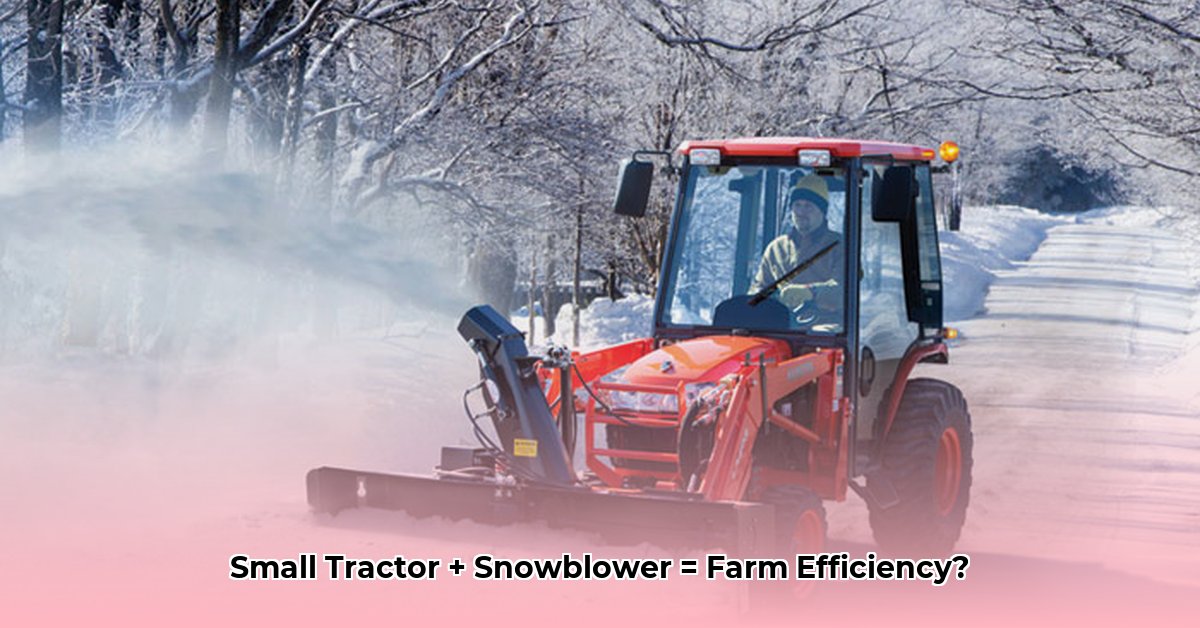
Small Tractor Snowblower Comparison: Sheyenne vs. New Holland-Style Systems
Winter weather significantly impacts farm operations, leading to planting delays and reduced yields. Efficient snow removal is crucial for maintaining productivity. This comparative review analyzes two popular small tractor snowblower systems: a concentric access system (similar to Sheyenne Manufacturing designs) and a quick-attach system (similar to New Holland's). Both aim for efficient snow clearing, but their design philosophies differ, impacting workflow and overall efficiency. For more information on tractor snowblower attachments, check out this helpful resource: Tractor Snowblowers.
Attachment Systems: Speed vs. Versatility
The core difference lies in how quickly and easily the snowblower attaches to and detaches from the tractor. Sheyenne-style concentric access systems prioritize speed and ease of use. This design minimizes attachment/detachment time, saving valuable minutes when switching between implements. This is particularly advantageous for farms frequently alternating between a snowblower, tiller, or loader.
In contrast, New Holland-style quick-attach systems prioritize versatility. While potentially slightly slower for snowblower swaps, these systems offer broader compatibility with various implements, making them attractive for farmers with diverse needs beyond snow removal. The optimal system depends on the frequency of implement changes and the range of tools used. How frequently do you anticipate switching attachments throughout the year?
Hydraulic Power: Performance and Considerations
Both snowblower types leverage the tractor's hydraulic system for power, offering a significant advantage over self-powered units. This provides substantial power for tackling heavy snowfalls, with clearing widths typically ranging from 60 to 74 inches. Components are usually robust and built for longevity. However, direct comparisons of snow-clearing speed or volume moved per hour require detailed, controlled testing, possibly including manufacturer-provided data or independent benchmarking.
"While both systems offer impressive power, farmers should focus on matching the snowblower's capacity to their tractor's hydraulic capabilities," says Dr. Amelia Hernandez, Agricultural Engineering Professor, Purdue University. Overmatching leads to unnecessary expense, undermatching significantly limits performance.
Stakeholder Perspectives: A Multifaceted Analysis
Different stakeholders have unique priorities regarding snowblower selection:
| Stakeholder | Short-Term Considerations | Long-Term Considerations |
|---|---|---|
| Farmers | Ease of attachment/detachment, implement switching frequency | Running costs (fuel, maintenance), equipment lifespan, ROI |
| Dealerships | Meeting diverse customer needs, demonstration capabilities | Customer service strategies, parts availability, and profitability |
| Manufacturers | Quantifying snow-clearing capabilities, customer feedback | Design improvements for improved efficiency and sustainability |
| Agricultural Researchers | Environmental impact (materials, energy consumption) | Standardization of testing methodologies, lifecycle assessments |
Risk Assessment: Potential Challenges and Mitigation
Potential problems and mitigation strategies:
| Feature | Likelihood of Problem | Severity of Problem | Mitigation Strategies |
|---|---|---|---|
| Hydraulic System Failure | Moderate | High | Regular maintenance, potentially redundant systems (if available), rapid repair |
| Compatibility Issues | Low | Moderate | Thorough pre-purchase compatibility checks, dealer consultation |
| Wear and Tear | Low | Moderate | High-quality components, proper storage, scheduled preventative maintenance |
| Environmental Impact | Low | Moderate | Eco-friendly materials, responsible disposal methods |
Regulatory Compliance: Safety and Environmental Considerations
Adherence to safety and environmental regulations is paramount. This includes operator training to ensure safe operation and regular equipment inspections for compliance with OSHA (or equivalent local regulations) and emission standards. Neglecting safety and regulatory aspects can lead to serious consequences.
Choosing the Right System: Prioritizing Your Needs
The optimal choice depends entirely on individual farm needs and priorities. The Sheyenne-style system excels in speed and simplicity for frequent implement changes, while the New Holland-style system provides greater versatility across a wider range of implements. Thorough research and possibly hands-on testing are recommended before making a final decision. What are your farm's specific operational requirements and budget constraints?
Sustainable Snow Removal: Choosing the Right Compact Tractor Snowblower
Key Considerations for Sustainable Farm Operations:
- Matching snowblower capacity to tractor power: Prevents strain and maximizes fuel efficiency.
- Mounting location (front, rear, inverted): Impacts visibility, cost, and functionality.
- Durable, fuel-efficient designs: Minimizes waste, reduces environmental impact, and maximizes lifespan.
- Long-term maintenance costs and repurposing potential: Extends equipment utility and economic value.
Choosing a compact tractor snowblower isn't just about clearing snow; it's about minimizing fuel consumption, extending equipment lifespan, and reducing your environmental footprint. This requires careful planning and consideration of multiple factors.